Thursday, April 18, 2019

Timeless

Time.  A part of golf we don't often recognize but are always facing. You have three minutes to find a lost ball(new rule), you have a tee time, you are encouraged to play in under 4 hours.  But at the end of the day the time you spend on a golf course should be something to connect you with nature and friends.  

When you finish putting out on the 18th green at St. Andrews, you might look up, note the time and determine if there is time for more golf.  

Image result for Royal and Ancient Clubhouse


Most golf courses have gone forward adding Rolex clock, Pebble Beach, Pinehurst, and Chambers Bay to name a few.  Usually near the clubhouse where the flow of the first tee and putting green can be seen from a common spot.

Image result for golf course clocks


Famous clocks are everywhere, discussed and used around the world, sometimes it is the most famous piece of architecture in the city.  There was an idea to create a classic look that would better suite the west elevation of the clubhouse.


Many of the clocks you see today are made by Electric Time located in Massachusetts just outside of Boston.  There design team helped create the design with my input.  It was always known that the A would represent the top of the hour.  The black colored markers on the clock and the 'brain' of the clock were made at there factory.  Now to have to it assembled. 


The clock measures nearly six feet tall.  Thank you to Kyle Montgomery, pictured above, and his team at TimberWorks Building for turning out a fabulous finished product.


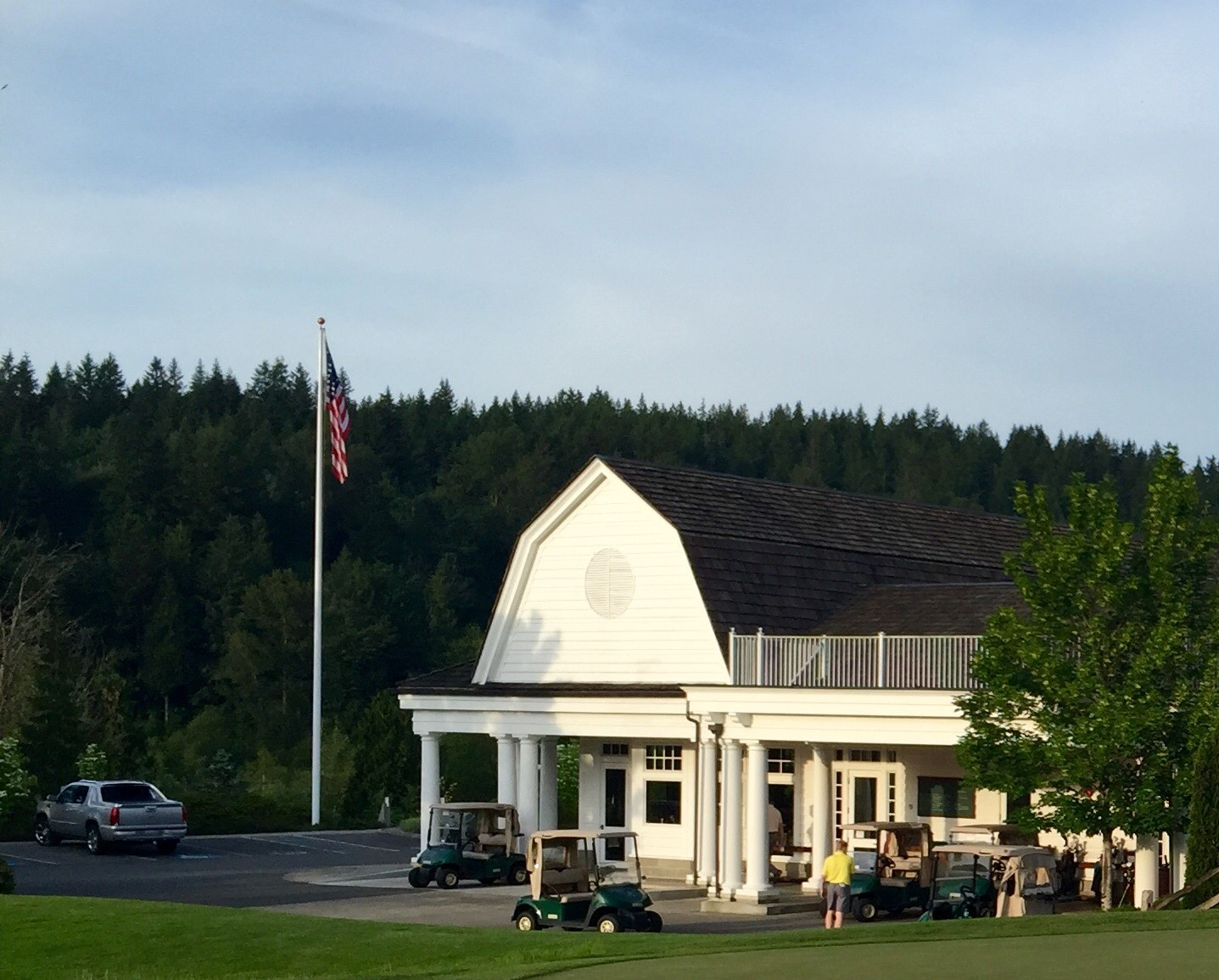
In 2010, there was an idea to add a flag pole near the front of the clubhouse.  The idea was Bill Tindall's and what a fantastic idea it was.  When I see the flag flying in the wind I often think of Bill and smile.  A simple idea, executed well has left a mark, I hope the clock leaves a similar mark in time.


Friday, March 1, 2019

The Course is Closed, what has your crew been up to?


The deep freeze of 2019 continues, and the course remains closed.  Most of the snow has melted, but overnight lows in the 20s have resulted in frozen ground.  Its is quite difficult to predict a date for when the course will re-open.  On the positive side we have checked a lot of things off the TO DO list.  Here is a recap of a few of those projects.
We are adding a new hole location sign to the 5th tee, we got the work shop in order and turned out a great looking sign. 

These signs are made from cedar trees that have been removed from the property allowing us to re-purpose materials when possible.

Curbing replacement continues and we were able to get a project done that I have been eyeing since we started this project.  Cleaning up the appearance behind the 12th green is a great aesthetic improvement.  We have installed nearly 1,000 linear feet of curbing to date and have just less than 1,000 feet to go to finish the project.  Our plan is to be done by 2020 with all the work being done in house.  The staff has done a tremendous job with the details and the result is a great result.  Basalt was the stone chosen to replace the existing material and should have a much longer life than the original stone.


Before and After


Last winter we fabricated new garbage cans for the course and this winter we are taking it two steps further.  We are transitioning the bricks under these areas to match the bricks used at the driving range mat area to create continuity.  New water coolers are also being fabricated to better match the color and look of the garbage can.  Many thanks to a former Aldarra employee, Dean Owen, for taking on the fabrication of the water coolers.  It is going to take time to change over all of the bricks on the course. 


The stain used on all the course accesories is the same product that will be used on the soffit's around the clubhouse when they are refinished this season.  Below is a sneak peak of the new water coolers.  


 A huge thank you to Dean Owen for helping us with this project.  Dean was a long time employee of Aldarra and his stamp is all over many of the projects on the course, he created the brand you see on all the cedar benches and accessories.  Thank you Dean.

 Tree removal has also been taking place during the closure a continuation of previous years efforts to open site lines and improve turf conditions.  One of the biggest areas we were able to address was the view down the first fairway.  Alder growth on both side before the pond has reduced the sight lines through the years.  You can see from this picture taken before the course opened the original view of the fairway.  Compare that the view in the photo below from May of 2015.  This is the renewed view down the first fairway.


Compare that to the view in the phone from May 2015.  

This is the current view from the First tee


The prolonged closure has also allowed us to ‘clean-up’ a lot of areas that have become over grown in recent years.  Finding time to attend to these areas between daily maintenance is difficult.  Closures allow us to tend to these areas, improving details around the course.


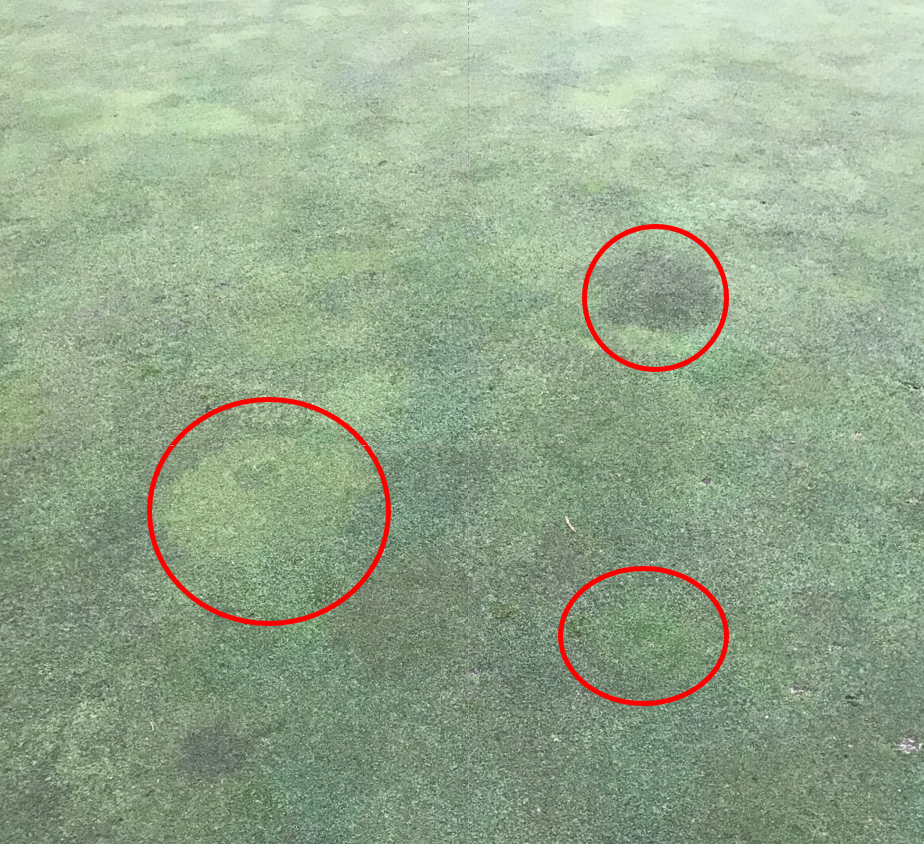
The ground was not frozen before the snow fell and the micro-climate at the interface of snow and the turf is a perfect environment for Pink Snow Mold spores to reproduce and spread.  The timing of our fungicide applications didn’t line up with the environmental conditions due to the length of snow cover and many tees and fairways will have a higher rate of disease patches than we have seen in any other year.  This will have no negative effect on turf health but will take additional to time recover as temperatures warm-up going into Spring.  Additional applications (fungicide and fertilizer) will be made when mother nature cooperates to help recovery.
We are excited to get the golf course open and have people back enjoying the fruits of our labor.   Thank you for your patience and hope to see you out soon.


Sunday, January 20, 2019

Alder Removal


This is a photo of the 13th tee in 2001, a narrow tree lined corridor that has been thinned out in the past 18 years.  The plan to remove as many alders, has been in place for many years, due to their short life-span.  You may also remember the area between #11 & 12 littered with alders.


The view from 11 tee looks much different today than it did in 2001.  Improved play-ability and native grass quality is a long term benefit of removal. 


During a recent cold spell we were able to continue the strategy of removing alders to the left of the 13th tee.  Removal of these trees eliminates a lot of fall cleanup and will improve the quality of the native grass in this area.


The stumps need to be ground to finish the current phase, this is done in house with our own equipment.  The final phase of this project is planting Fir and Cedar trees later this year.  Don't forget to check out the improved view from the 11th tee.


Thursday, December 27, 2018

Alternate Tee #18


There is a large gap in the teeing options on the 18th hole, the Members tee plaque is 402, while the Forward tee is 324.  Adding a new tee at 360 creates more options for players of many skill levels.  Players who utilize the forward tee during the warmer months could play this tee, while members who play members tees could also use this tee during the winter months.  

The tee shot on the 18th hole is one of the most challenging tee shots on the golf course, the addition on the new tee will create an option that fits with carry distances for golfers who play these tee options.  Track-man has changed how golf is played, data is now available to correlate swing speed and optimal carry distance with each club.


This diagram is a quick reference guide for carry distances with each club in relation to swing speed.   The picture below shows the carry distance of the new tee compared to the distance of the current member tee plaque.


The forty yard difference makes a huge difference in the difficult of the carry for not only the drive, but also the second shot, which is also a forced carry.  I hope you enjoy the new tee and the options that it provides to fit your game.  The tee will open for play in the Spring of 2019.  

Have a safe and Happy New Year!

Monday, November 26, 2018

Finally


That's the only way to describe the reaction to completing this project, finally.  The area just left of the fourth tee that extends all way up to the cart path behind the third green has been an eyesore that needed our attention.  This area was used as a haul road during construction of the golf course and has struggled since the course opened.  A lot has been made of what to do with this area through the years, for now this was our plan to improve it.


The first step was tilling the existing soil and trying to incorporate  some additional soil to help with future growing conditions.  


This was the most economical fix to an area of this size and are hoping it improves the aesthetics of this area next season.  The soil was then compacted before adding seed and fertilizer.  Now, we wait.  Please keep of this area as the seed establishes over the winter/spring.  Walk either to the left or right of this area, not through it for the time being.  Thank you


Monday, October 8, 2018

Which one is the bentgrass?


All of them.  Ok, let me explain how they all look so different.  

Plants have genes just like humans.  The human genome consists of 19,000 genes, the genome of a grass plant (i.e Corn, rice, bentgrass) is estimated to be around 40,000.  That's a lot of different ways to express itself over time.

Plants will naturally segregate genetically over time, expressing different growth patterns and color, during its life span.  Plant breeders are constantly creating new varieties and use these genetic changes to cultivate new varieties by crossing desirable traits expressed in two plants of the same species (Think back to high school and the Punnett square).

The diversity throughout a year (season to season) I believe can also change.  We use a chemical on the greens called Trimmit to help control Poa encroachment, it is my belief that this chemical (a plant growth regulator) causes greater genetic expression, showing more variability on a green.  

Lets think about it like this;

These nine babies in a nursery look very similar all wrapped in the same blanket and would be hard to distinguish as individuals for most people.  As these kids age and grow into themselves at the age of 18 it would be much easier to distinguish them as individuals.  

The picture below is a 'report card' provided by Seed Research of Oregon listing a few characteristics of many bentgrass cultivars that have been available for commercial purchase.  I have placed an arrow next to the cultivar that was originally planted for our putting surfaces (Century).


I really like the variety that Paul chose years ago, it has some really good characteristics for our environment.  If the time ever came for us to regrass the putting surfaces I would choose a variety similar to that of Century.
Thank you to the many of you who brought this topic to my attention and I hope this all makes more sense.  Have a great day!


Monday, September 10, 2018

Rip off the band-aid

We started a project today that has been long overdue and with that it brought me to the blog to talk about it.  I've done a terrible job using this forum as a place to communicate with members, guests, colleagues, or anyone who enjoys reading blogs.   I have a fear of writing and more importantly being judged for what I wrote.  English was my least favorite class in high school and I always struggled believing in myself.  While working on the project near the first green, the thought crossed my mind that this project needs to be a blog post.  That thought instantly froze my thinking when the fear of writing took over.  It's weird how the mind works.


I've been an avid listener of "The Finding Mastery" Podcast by Michael Gervais since in started. (If you don't listen to this podcast, you really should.)  I usually listen to it on my way to and from work and any other time I can find.  Gervais said something today that instantly brought me back to that moment in the morning when my fear of writing froze my thinking,
         
                             "For many, fear doesn't come from the fact that we are going to blow it.
                               It is that we are not going to live up to what we could be or what we 
                               we could do."

Boom.  That is it for me.  That's the fear or writing, I don't fear the failure of a bad grade, I fear the failure of it not being good enough.  The curbing on the golf course is similar to my fear of writing.  I hoped the curbing would go away or fix itself, so its time to rip both things off and go for it.  

Back to the curbing.  The original product was a man-made stone that had deteriorated to its current state over nearly two decades.  We have sourced a new product, Pacific black basalt from a local vendor, and we are confident the life span is much longer.


 After removing the sod and excavating the old curbing, we use the flat trough left by the old curbing to start installation of the basalt.  Starting in the middle allows us to gradually lower the end pieces to the grade of the cartpath.  Piece by piece they go in the ground and check for level along the way.  Back fill the void behind the curbing, place down some new sod and the finished product is as you see below.

The goal is to finish this project over the next two winters, it could take longer.  Hole by hole, piece by piece, just like my fear or writing, we will get it done and I will use this platform more frequently to share the happenings around the property.


Thank you for reading and until next time.  Have a great day.